
-
In this post, Dr. Qiong Ran from the Chongqing University of Technology, discuss and share insights from their recent publication, “Effects of arbuscular mycorrhizal fungi on carbon assimilation and ecological stoichiometry of maize under combined abiotic stresses”, in the Journal of Plant Ecology.
Origin of the study: From field observations to scientific questions
During fieldwork in the karst regions of Southwest China, we frequently encountered a puzzling phenomenon: maize often struggled to grow in certain soils. Surprisingly, these soils were not extremely dry—but they commonly contained high levels of calcium salts. Local farmers described them as “white soils that hurt the crops”. Yet it remained unclear whether it was salinity, calcium, drought, or their combination that constrained maize growth. Meanwhile, we noticed something intriguing: in these high-calcium and moderately dry soils, maize roots often showed low mycorrhizal colonization, despite the well-known role of AMF in helping plants acquire water and nutrients under stress. These scattered observations gradually converged into the central question of our study: under combined drought and calcium salt stress, can AMF still support maize by enhancing photosynthesis and nutrient homeostasis?
The process: Bringing complex stressors into a controlled experiment
To disentangle the interactive effects of multiple stressors, we designed a 2×2×2 factorial greenhouse experiment, reconstructing every combination of “drought vs. well-watered,” “high calcium vs. control,” and “with vs. without AMF” (Fig.1-4). To maintain strict control, we collected calcareous soil from Jigong Mountain, sterilized it at 121°C, mixed it with sand, and added basal nutrients—ensuring that differences among treatments originated only from Ca, water, and AMF factors. High-calcium stress was simulated by adding CaCl₂ to reach 0.1% exchangeable Ca. We weighed pots daily to maintain 10% water content for drought treatments and 20% for well-watered ones, allowing us to capture every subtle physiological response of maize.
Significance: Understanding the three-way interplay among microbes, plants, and stress
The results surprised us: under the combined impact of high calcium and drought, AMF did not diminish in function—rather, it became even more influential. It enhanced maize performance across key physiological processes, including chlorophyll synthesis, stomatal behavior, water-use efficiency, and C:N:P rebalancing (Fig.2-4). In the most stressful conditions, AMF acted as the “final stabilizer” that sustained maize photosynthesis and internal homeostasis. This reshapes our understanding of AMF—not only as a nutrient facilitator but as a core regulator stabilizing plants under complex environmental stresses. Our findings offer new pathways for harnessing beneficial microbes to improve crop resilience in regions increasingly threatened by salinization and drought.
About the author
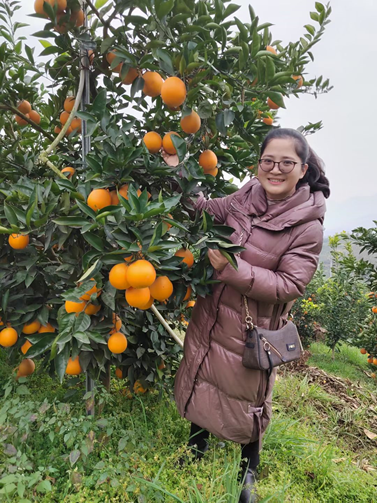
I am a lecturer at the School of Management, Chongqing University of Technology. My main research areas include environmental ecology, land ecology, and related fields. During my doctoral studies under the supervision of Professor Zhong Zhangcheng, I primarily focused on the ecological effects of arbuscular mycorrhizal fungi (AMF) on plants in rocky desertification habitats. I conducted ecological surveys in karst areas across Chongqing, Guizhou, Sichuan, and other regions, while investigating the constraints on agricultural production. This work prompted me to explore ways to improve agricultural planting efficiency in karst areas, leading me to carry out a specialized study on the ecological effects of AMF on maize seedlings under drought and high-calcium conditions in such habitats. During my postdoctoral studies, I further delved into mechanistic research on the role of AMF in crops grown in rocky desertification habitats. I have published more than 10 papers in journals including Journal of Plant Ecology, Acta Ecologica Sinica, and Soils and Crops.
CiteScore: 6.3
Yuanhe Yang
Bernhard Schmid
ISSN 1752-9921(print)
ISSN 1752-993X(online)